Scanvaegt Automatic Weighing Solutions | Summit Process Solutions
5 Ways to Boost Precision Without Slowing Your Line
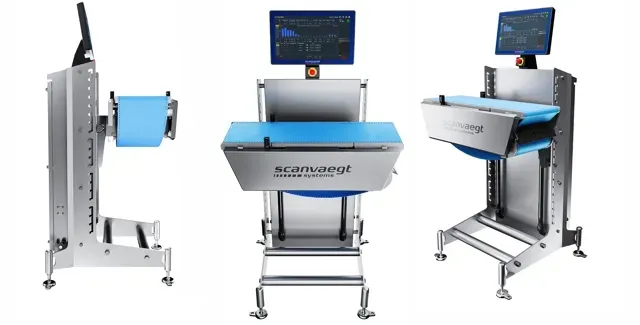
Scanvaegt automatic weighing solutions help food producers increase batching and grading accuracy while reducing giveaway, and keep lines moving. By matching Automatic Weighing systems to your products and throughput, you get precise measuring with less rework and downtime. Here’s how these solutions drive operational efficiency—and how to pick the right fit without disrupting production.
What you’ll learn from this blog
When to implement an Automatic Weighing Solution
How improved accuracy reduces giveaway and boosts yield
Practical steps to integrate automatic weighing solutions into existing lines
Data, compliance, and traceability best practices for auditors
Real-world examples and ROI expectations you can benchmark
Common pitfalls to avoid during specification and commissioning
Start with the finish line: accuracy, yield, uptime. If you only remember one thing, remember this: the best weighing solution is the one that pays for itself in reduced giveaway and higher throughput. Think of it like a race—precision is the runner, but uptime is the track. You need both.
Headline takeaway: Moving from manual or legacy setups to modern automatic weighing solutions reduces giveaway and the potential for excessive rework. That’s your payback engine.
Quick example: Automatic weighing systems reduce give-away by packing closer to target weight using real-time feedback, unlike manual methods that rely on wider safety margins. Even a small reduction — say from 3% to 1% — delivers significant raw material savings at scale. This directly improves yield accuracy and profitability across the production line.
Bonus effect: Consistent packs mean fewer holds at QA and faster audits. Your OEE nudges up because of less re-work.
Step-by-step selection flow for automatic weighing systems:
Define target weights and allowable tolerances by SKU.
Map required throughput (items /min) and planned growth for 18–24 months.
Identify product behaviour (sticky, fragile, variable piece size).
Specify raw material specifications (dimensions and average item weight)
Define the job specification – batching to fixed weight with tolerances, grading to specific weight ranges with tolerance or minimum eight batching
Specify the correct infeed solution for the product and required items/min
Identify if the batches are being collected at the batching stations or transported to a central packing area
Confirm data, hygiene, and footprint requirements.
Pilot on your toughest SKU first—if it works there, it’ll shine elsewhere.
Integration without drama: PLCs, data, and hygiene Let’s talk integration - the part that can quietly make or break your project. The good news? With a solid spec, it’s boring (in the best way).
Controls and PLCs: Define I/O early—start/stop, speed signals, reject confirmation, alarms. Scanvaegt automatic weighing solutions can be integrated with Siemens, Allen-Bradley, and modern SCADA systems.
Data and traceability: Log timestamps, SKU, target weight, actual weight, batch/lot, and reject reason. All information from the automatic weighing system can be made available to be exported to most MES/ERP systems.
Hygiene and cleanability: Choose IP ratings that match your sanitation regime (foam-and-rinse vs. high-pressure). Sloped surfaces, quick-release belts, and tool-less guards save hours per week. Tiny design details = big sanitation wins.
Avoid the common pitfalls (so you don’t learn the hard way)
Under-specifying conveyors: Starvation or surges will wreck accuracy. Buffer smartly.
Ignoring product behaviour: Oily, sticky, or irregular products may need tailored feeders or surface finishes.
Vague tolerances: “As accurate as possible” leads to overbuying. Put a number on it.
Skipping operator training: Great tech still needs champions. Plan short, hands-on sessions.
Forgetting spare parts and calibration: A 15-minute plan prevents 2-hour stoppages.
No pilot: Test your worst-case SKU first, not the easy one.
Your ROI, in plain terms
Savings: Reduced giveaway, fewer rejected batches, less rework.
Revenue: Higher consistent throughput; more saleable packs per shift.
Risk: Stronger compliance, better audit trails, fewer recalls or disputes.
People: Lighter cognitive load for operators, clearer alarms, faster changeovers.
Conclusion and next step Precision doesn’t have to slow you down. With the right mix of Scanvaegt automatic weighing solutions—you can tighten accuracy, raise OEE, and keep auditors smiling. If you’re ready to map a solution to your toughest SKUs, Summit Pros will guide you from spec to sign-off. Request a quote, and let’s build the line you wish you already had.